
One Framework for Every Layer of Governance, Risk, and Compliance.
Governance, risk and compliance, brought together on one platform that keeps your organization audit-ready every day of the year.
Inside the Platform
A dashboard for every part of your compliance program
From task tracking and data mapping to monitoring trends and approvals, Sigmify GRC gives each area of your program a clear, real-time view, so every team sees exactly what needs its attention.
Getting started with Sigmify GRC
Frameworks covered
Dedicated modules and pre-built checklists for ISO 27001, SOC 2, GDPR, DPDPA, and CCPA/CPRA, with more addressable through the Compliance & IT Governance module.
Time to get started
Scan & Setup scans your environment first, so most organizations move into Perform without a lengthy manual setup process.
Modules required to start
None of this requires adopting all nine GRC modules at once. Most teams start with the one tied to their most urgent driver, such as a regulatory deadline, an upcoming audit or a vendor-risk review, and expand from there. The GRC module buyer’s guide can help identify the right starting point.
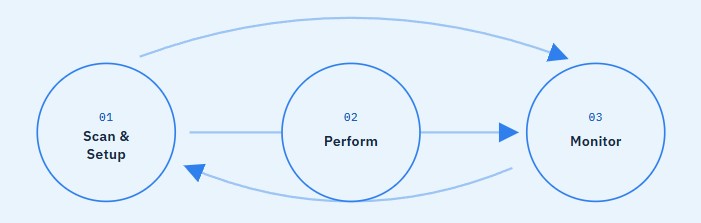
Three stages, built to hold under audit pressure
A checklist tells you what's required. It doesn't delegate the work, warn you before a deadline slips, or notice when your environment drifts out of scope. Sigmify GRC is built to do all three, stage by stage.
Scan & Setup
A working framework from day one
Ready standards and checklists save teams the time and effort of assembling a framework from scratch. You start from something workable, not a blank page.
Your standards, not a template
Adopt only the standards that fit your organization. The platform suggests best practices as you go, and you decide which to apply.
Consistency isn't left to memory
Checklist-driven setup keeps every framework you adopt consistent and complete, so nothing depends on one person remembering the right sequence.
Perform
Ownership that's never ambiguous
Responsibilities are clearly defined, with a provision to delegate tasks, so it’s always clear whose job a control is, even as work moves between people.
Deadlines announce themselves
Alerts fire when tasks become due, so a control or an evidence request doesn’t quietly slip past its date because no one happened to check.
A path for what needs a second look
Exceptions and risks run through a defined workflow, with escalation paths built in for anything that needs review rather than automatic sign-off.
Monitor
One dashboard, every framework
Progress across every module, framework, and task sits in a single dashboard, not a set of spreadsheets someone has to reconcile before a status update.
Defaults surface before they're findings
Defaults are highlighted before the situation goes out of hand, caught early rather than discovered for the first time when the auditor asks.
Warnings reflect what's actually happening
Alerts are driven by real-time SIEM and HRM data from the systems you already run, so early warnings track your actual environment and workforce, with no separate monitoring system to stand up