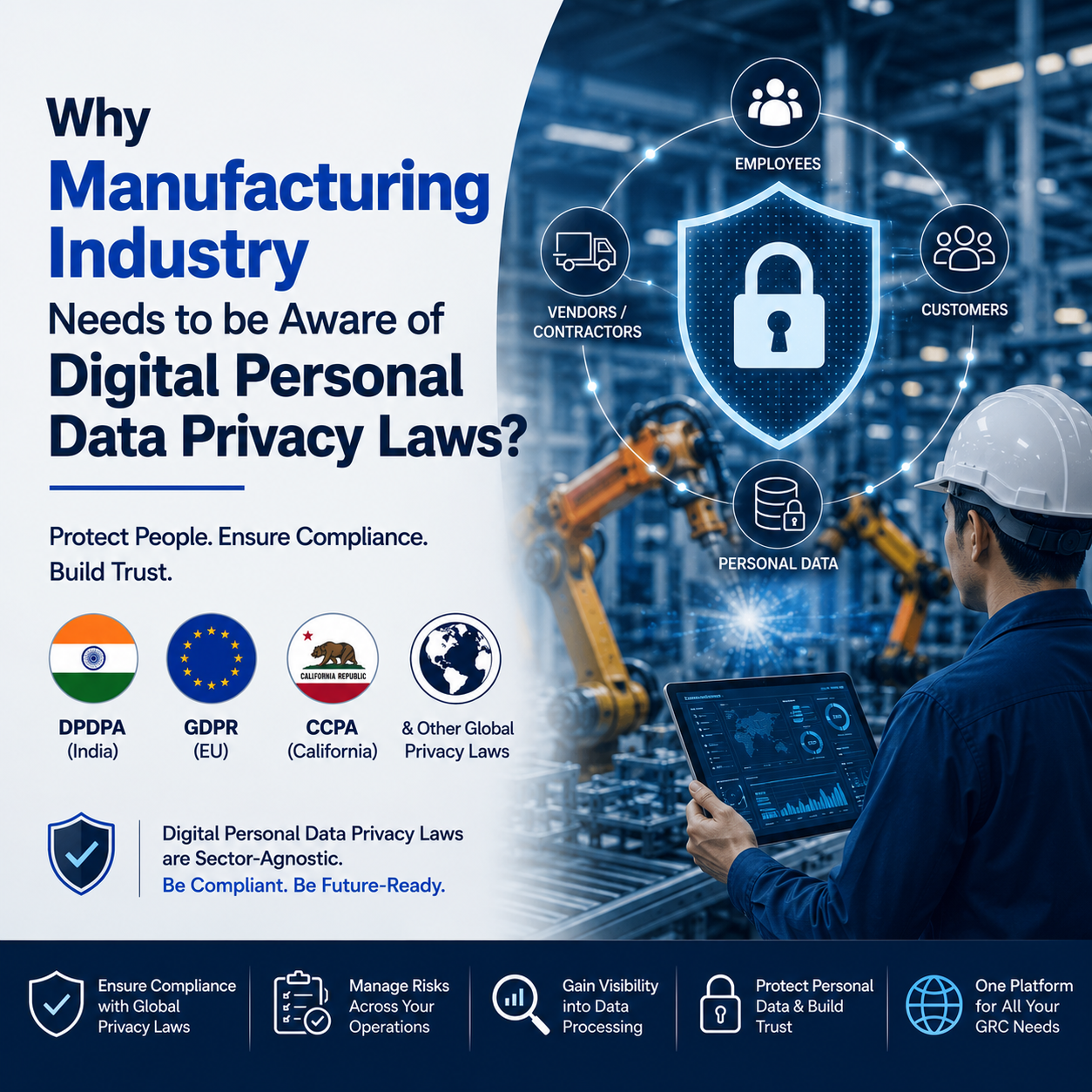
The India’s Digital Personal Data Protection Act (DPDPA), the European Union’s General Data Protection Regulation (GDPR), the California Consumer Privacy Act (CCPA), and other global digital privacy regulations govern how organizations collect, process, store, and protect personal data. These Digital Personal Data Privacy Laws are sector-agnostic and apply to the manufacturing industry just as much as they do to financial services, healthcare, technology, or retail organizations.
We all understand what a Manufacturing Company is. To be on the same page here is how it can be described –
A manufacturing company is a business that transforms raw materials, components, or parts into finished goods using machinery, labour, tools, and chemical or physical processing. Common sectors include automotive, electronics, food and beverage, pharmaceuticals, textiles, and machinery among others.

For a manufacturing company, Digital Personal Data Privacy Laws centers on how they handle the “digital personal data” of three main groups: employees, vendors/contractors, and customers
Companies in the manufacturing industry must now ensure that personal data is processed responsibly, securely, and transparently. For many companies, this represents a significant shift from traditional compliance practices as organizations increasingly need to comply with multiple Digital Personal Data Privacy Laws across different jurisdictions.
While organizations may attempt to manage compliance through manual processes and spreadsheets, the complexity of modern regulatory environments makes this approach increasingly unsustainable. This is where Governance, Risk, and Compliance (GRC) platforms become critical.
Here are the key impact areas:
While the core product may be physical, all data is digital. Digital Personal Data Privacy Laws applies if the companies collect data online or digitize offline records collected on paper.
Human Resources (HR)
Processing data for payroll, benefits, attendance (biometrics), and performance reviews.
Employment is a Legitimate Use to collect Personal Data. An explicit consent might not be needed for routine HR tasks. An HR department is required to collect and perform background verification of the employees. Personal Data such as name, address, phone number, family information, education, experience details are routinely collected and verified.
Other personal data includes details of payroll, benefits, attendance (biometrics) and performance reviews.
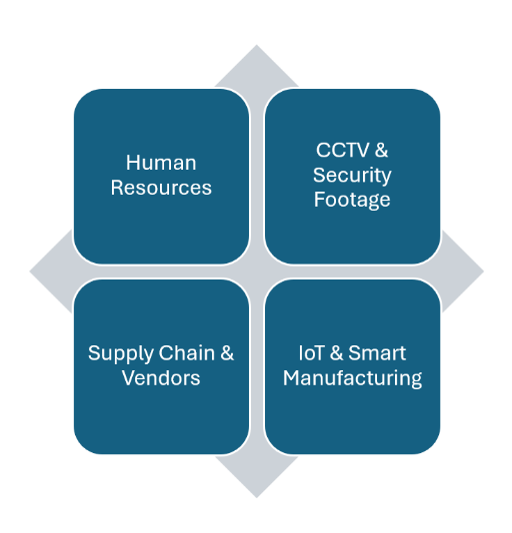
Supply Chain & Vendors
A manufacturing company needs to collect data of individual contractors, small-scale suppliers in sole proprietary firms and Directors and key persons’ data in mid or big organizations.
IoT & Smart Manufacturing
Data that is collected using IoT sensors that track individual worker movements, productivity, or safety biometrics may qualify as personal data under applicable Digital Personal Data Privacy Laws.
CCTV & Security
Digital footage of visitors and staff at factory gates is considered personal data under many Digital Personal Data Privacy Laws, including DPDPA, GDPR, and similar regulations where individuals can be identified.

Now that it is established that companies in manufacturing sector collect individual data, let us examine why do they need a GRC platform.
A GRC (Governance, Risk, and Compliance) platform is a centralized, often cloud-based software solution that streamlines how organizations manage regulatory compliance with Digital Personal Data Privacy Laws and other regulatory obligations, identify risks, and enforce internal policies. It replaces manual, fragmented spreadsheets with “The central place for all data ” to automate audits, map controls, and improve efficiency.