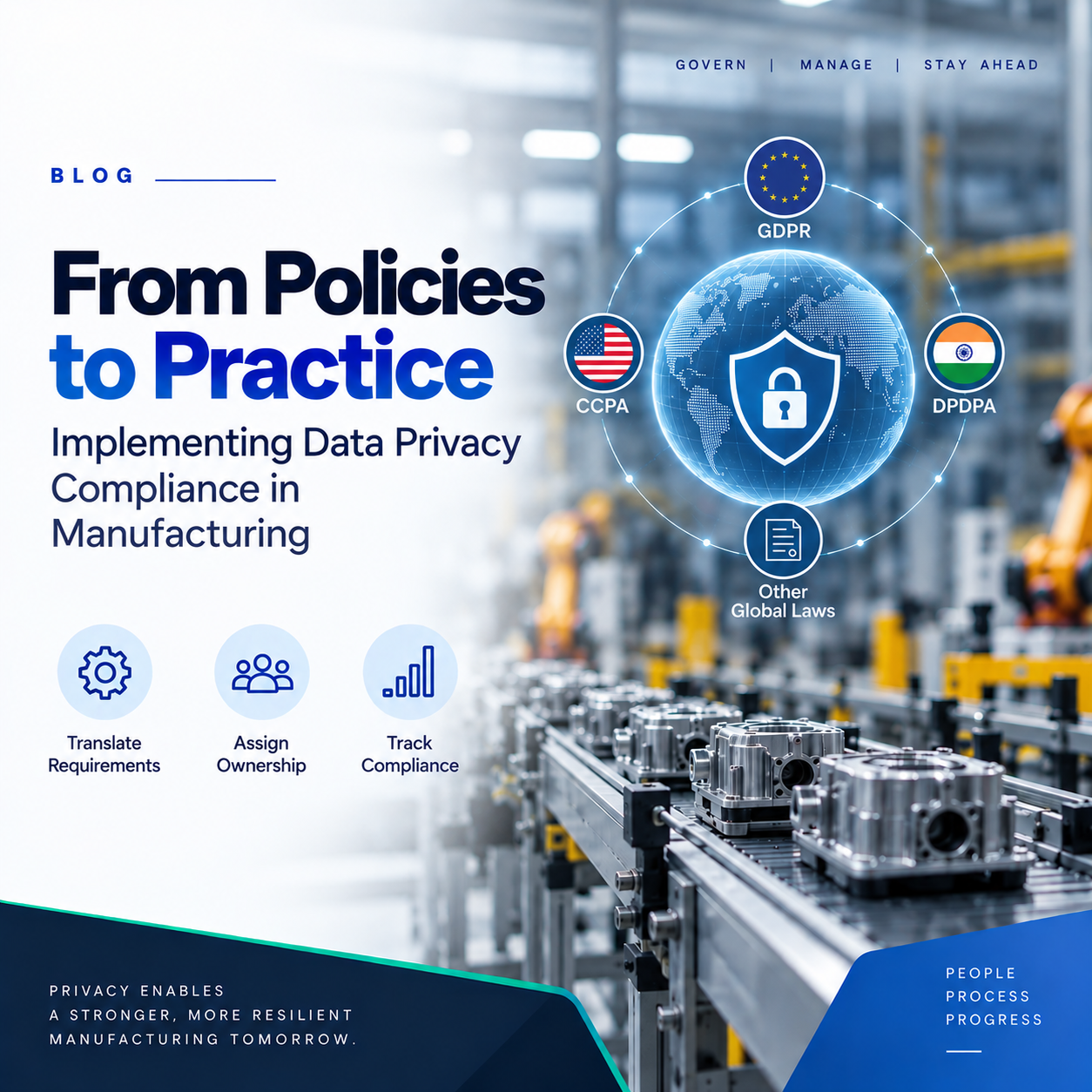
The introduction of comprehensive data privacy laws and regulations such as the DPDPA, GDPR, CCPA, and other regional privacy frameworks has prompted manufacturing organizations across the globe to develop data privacy policies and frameworks. However, creating policies is only the first step. The real challenge lies in translating these policies into operational practices across the enterprise.
This is where Governance, Risk, and Compliance (GRC) platforms play a vital role.
The Gap Between Policy and Implementation
Many manufacturing organizations begin their compliance journey by drafting privacy policies, employee guidelines, and vendor agreements. While these documents are essential, they do not automatically ensure compliance.
Common challenges include:
- Lack of clarity around control ownership
- Inconsistent implementation across departments
- Limited tracking of policy adherence
- Difficulty monitoring ongoing compliance
Without a structured approach, policies often remain theoretical rather than operational.
Assessment
Start by Assessing where the organisation stands on its Data Privacy Maturity Score. A simple self-assessment can set the ball rolling whereas a subject matter expert led assessment can help gather deeper understanding of the status.
Example of a question to assess your understanding of the Justification of Data Collection.
Structuring Compliance with a Control Framework
A GRC platform helps manufacturing organizations translate regulatory requirements into actionable controls. For example, data privacy obligations under applicable regulations such as DPDPA, GDPR, CCPA, and other regional privacy laws can be mapped to specific organizational controls such as:
· Privacy notices for individuals
· Consent management processes
· Access control mechanisms
· Data retention policies
· Incident response procedures
Each control can then be assigned to responsible teams, ensuring accountability.
Establishing Clear Ownership
One of the key strengths of GRC platforms is the ability to assign clear ownership for compliance activities.
A GRC platform connects these roles within a unified framework, ensuring that responsibilities are clearly defined.
In the next blog post, we will review different components of a data privacy compliance solution that help manufacturing organizations move forward in their data privacy compliance journey.